



Telephone: (647) 654-6046
Mission Statement
|
Overview African Dance and Culture Explore the African dance technique through a variety of movements based on traditional practices on the continent of Mother Africa. Learn movements that reflect the lives of a people, the culture of a society, and songs, stories, and drum patterns that uplift the soul of an identity. Many roots, many colors, one vision. |
 |
|
|
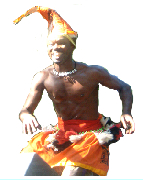
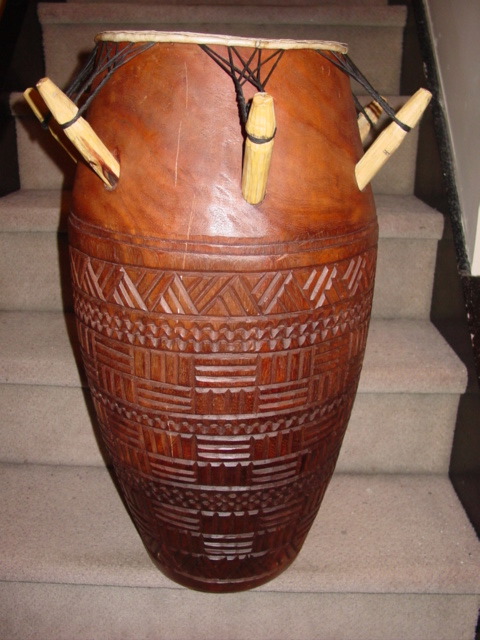
The African Dance Ensemble (ADE) is unique group that researches and teaches the roots of African traditional practice as an embodiment of social and ethnological phenomena. We practice dances from across the motherland of Africa. The sharing of African art forms is accomplished through the scope of performance, workshops, residencies, and lectures. ADE is an old concept in new shoes, in that an old practice of cultural understanding has been a part of the African social fabric since time immemorial. This is evident in the hospitality of Africans to go the extra mile in keeping their traditions alive and preserving it appropriately without canonizing it. This act of maintaining tradition helps the ADE team to present African traditional music, dance and song, as well as to create new works in African traditional idioms. We preserve these art forms through education: both as oral and academic transmissions. There are many songs, dances and regalia that reflect specific ethnic groups. Each ethnic group has more than five different songs and dances. These performances mimic the experiences of farming, fishing, hunting, festivals, funerals, and puberty rites. This art form has a lot to offer humankind on this earth. We have music that heals the soul. These idioms of tradition range from dancing and singing, costumes, body paint, hair braiding, and the making of drums and instruments. Those who are passionate about playing African indigenous instruments are given the opportunity to learn. The significance and social functions of traditional practices are explored through field trips to different parts of Africa. Our doors are open to all humans: all ethnicities, beliefs, and ages: whoever you are, ‘Mother Africa loves you’. As we stand in the limelight of cultural responsibility we deem the importance of humanity first because ‘art’ is about humans. Our lives are reflected in our dances and our dances and songs reflect our visions. Our visions and inspirations connect us to our ancestors. |
 |
The Meaning of ADE
Ade (pronounced “AA-day”) is a Ga-Adangbe word signifying “telling,” “as told,” or “as said.” The word refers to legends of the past or what is foretold for the future. Ade is also a male name in the Ga-Adangbe language. The Ga people are found in Accra, on the costal belt of Ghana, West Africa. This word was chosen after considering the nature of humanity. Humans have history, they have presence and they have future. All these cycles are linked together by Ade, “as told.” Another sphere of meaning can be decoded from the acronym of A.D.E. – African Dance Ensemble.
The Roots of ADE
The African Dance Ensemble was founded in September 2001. The founder and Artistic Director, Isaac Akrong, envisioned a small world of cultures blending to learn more about African culture through the arts and related disciplines. Having being choreographing over a decade, presenting ethnographic/ethnomusicological works on African culture, dance, music, songs, drumming, flutes, and xylophones, he is blessed now with a wonderful team of performers with whom to share this holistic art form of an all-inclusive African theatre experience. This is something that no text can represent but the experience of interaction between our performers and the world is what tells (“ade”) our story better. After this experience you will have your own version of this story to tell the world.
We deem it human to share what Africa has to offer – a smile on your face and goodness in your hearts. We are only servants of the tradition.
There are many repertories but we share not less than 60 ethnic dances from Ghana and the West African subregion, East, Central, and South Africa. We also create new choreography and songs within the African idioms. We create these within the traditional idioms in order to keep the tradition of the people alive.
Objectives
- To uphold the diverse indigenous cultures of Africa, of over 500 million people with thousands of ethnic groupings from the continent and the Diaspora.
- To research and look at ways of development, thereby maintaining the appreciable hue of the unique cultures of many ethnicities across Africa, looking at the categories of West Africa, East Africa, Central and Southern Africa.
- We tell our story through movement that connects nature to songs that unfold the spirits of the universe, rhythms, melodies, and ululations that touch the very fabric of humanity.
- To serve as a window into the ethnology of the land and its people, to uphold the culture and tradition with integrity.
- To promote, educate and put something in place for posterity. We tell our story because it is good to tell your story.
- To promote diversity within the single vision of African Performance.
- We perform our art forms with passions; passions of happiness, joy, the sweat of life, and the rhythms that make your heart jump. This is fueled by love, peace, harmony, truthfulness, honesty, and team effort.
- We use music and dance as a medium to discourage society from violence or anything that leads to disharmony, and thereby fostering anti-bullying in schools and any organization, and generally to educate the consciousness of human thinking to respect and honour all humans on earth without any taxonomy.
- It is inherent that the resource of oral tradition sharing is very important and paramount to our modes of teaching, which is lively and very spontaneous. Individuals are spontaneously taught many elements of the music and dance, which is one phenomenon, from a traditional perspective without being compartmentalized.
- We create contemporary works as well, on a different level and context, to push the boundaries of today’s generation within the idioms of the Motherland performance.
- To document existing and to create new children’s and teenagers’ games and songs, as well as the adult versions.
- To tour the world with the art forms, thereby educating and exploring what is meant by African performance performed by a diverse group of people from around the world. In effect, ADE represents the world, and it could be called World Dance Ensemble. If it is true that the source of humanity comes from Africa, then when we call it African Dance Ensemble, it implies World Dance Ensemble. Anyone from any part of the world, any age, any orientation, is welcome to partake in ADE activities, because we serve the human needs, not one specific ethnic group, no theoretical perspective, just humans is the key.
Disclaimer
We aim at retrieving the oral tradition. In the course of doing that, we are still in process. Tradition is dynamic, it is growing. What you are reading today is not blocked in stone. We do not canonize our artform. As of the time of typing, it is still growing, because it is a living art. The life of the people is the artform. In an attempt to do research, we welcome any comments and suggestions that will champion the expansion of this database among others, as a contribution to the creation of awareness of African performing arts and culture.
© ADE 2006 - All Rights Reserved